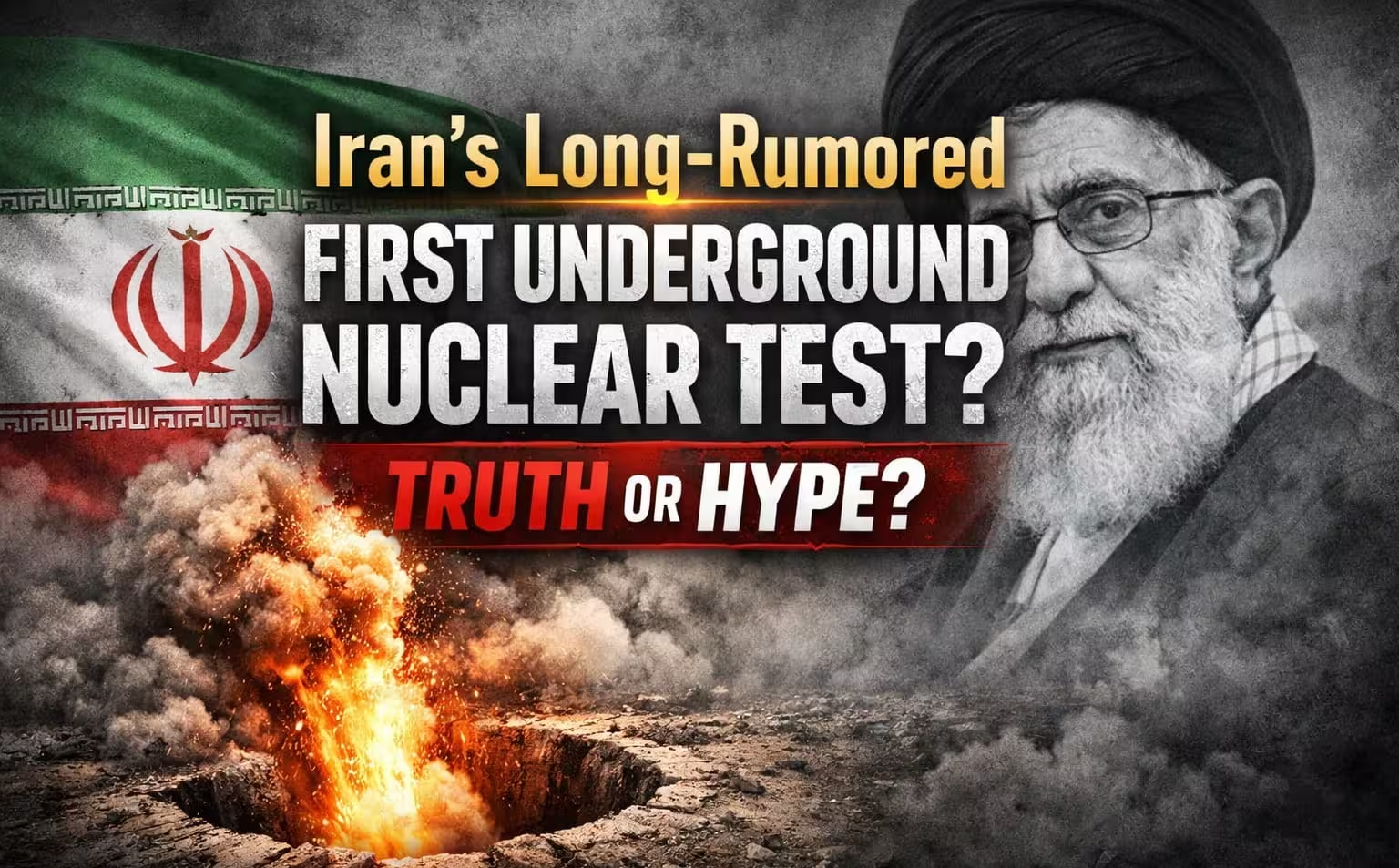
Tehran, March 4, 2026 — A sharp jolt rattled southern Iran on March 3, sending shockwaves far beyond its borders. At approximately 10:24 a.m. local time, a 4.3-magnitude earthquake struck near Gerash in Fars Province, at a shallow depth of 10 km. No major damage or casualties were reported, yet within minutes, the internet lit up with a chilling theory: Was this a natural tremor… or Iran’s long-rumored first underground nuclear test?
The timing could not have been more provocative. The quake arrived amid intense U.S.-Israeli military strikes targeting Iranian facilities, including recent apparent hits on nuclear sites like Natanz. Social media erupted with claims that Tehran, feeling cornered, had finally crossed the nuclear threshold in secret.
Posts compared the event to historical test signatures, noting the shallow depth and proximity to sensitive military zones in the seismically volatile Zagros region. Some even drew parallels to a simultaneous swarm of minor quakes near Nevada’s Tonopah Test Range — America’s own secretive nuclear testing ground — fueling wild cross-continental conspiracy threads.
“Coincidence? During open war? This is it,” one viral post read. The speculation built rapidly: Had Iran detonated a device to signal possession of the bomb, daring the world to respond?
For tense hours, the question dominated global feeds and private chats among analysts. Every unverified clip from the region, every aftershock report, added fuel to the fire. In a conflict already teetering on existential stakes — with reports of damaged enrichment plants and escalating airstrikes — this single seismic blip felt like the potential tipping point toward catastrophe.
But as data poured in from global monitoring networks, the suspense gave way to clarity.
The United States Geological Survey (USGS) and the Comprehensive Nuclear-Test-Ban Treaty Organization (CTBTO) quickly analyzed the waveforms from dozens of stations. The event’s seismic signature — balanced primary and secondary waves — matched a classic tectonic rupture along the Zagros fold-thrust belt, where the Arabian and Eurasian plates collide relentlessly.
Nuclear explosions produce sharp, high-frequency P-waves with unusually weak follow-on waves; this quake showed none of that. At magnitude 3.9–4.3 (depending on the measuring body), it was far too modest for even a low-yield demonstration blast — compare it to North Korea’s smallest confirmed tests, which registered noticeably higher.
No unusual radiation spikes appeared in air or ground samples. Iranian officials reported normal inspections in the area, and the CTBTO explicitly classified the event as a natural earthquake south of Bid Shahr. Experts emphasized that Fars Province routinely experiences such moderate tremors; this one fit the region’s geological profile perfectly.
In the fog of war, where every rumble carries strategic weight, speculation outpaced science for a moment. The March 3 tremor was not Iran’s secret nuclear debut — it was simply the earth doing what it has done for millennia in one of the world’s most active seismic zones.
As the U.S.-Israel campaign continues and tensions show no sign of easing, the real detonation risk remains not underground… but in the fragile calculus of diplomacy.

Nikhil Sharma is a seasoned news editor at TheDailyNewsTimes.com, based in India. With over a decade of experience, he specializes in political, entertainment and cultural journalism. His editorial leadership delivers balanced, impactful content for a global audience. Nikhil’s dedication to truth has earned him widespread respect in the industry.