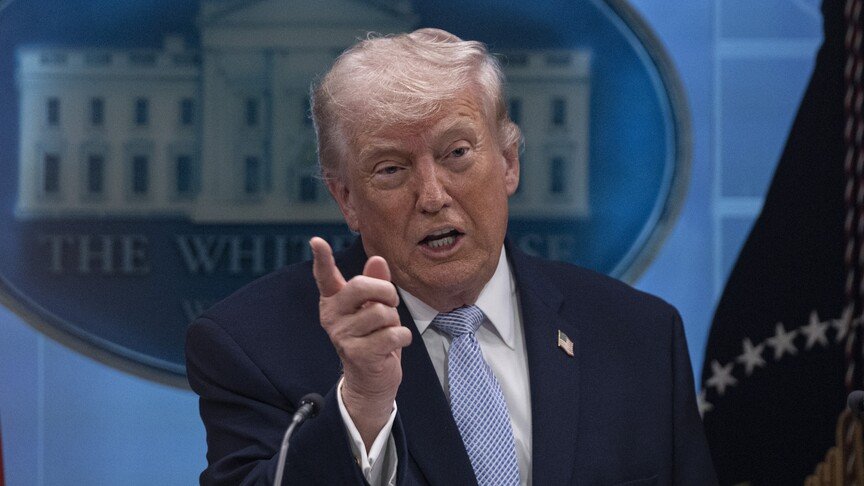
Washington / Islamabad — In a dramatic turn amid rising Middle East tensions, U.S. President Donald Trump has announced a two-week suspension of planned military action against Iran, linking the pause to diplomatic progress and a potential agreement over the Strait of Hormuz.
In a post on Truth Social, Trump stated that the decision followed direct conversations with Pakistan’s Prime Minister Shehbaz Sharif and Chief of Army Staff Field Marshal Asim Munir, who urged restraint and called for a window to pursue diplomacy. According to the statement, the suspension is conditional upon Iran agreeing to the “complete, immediate, and safe opening” of the Strait of Hormuz, a critical global oil transit route.
Trump described the pause as a “double-sided ceasefire”, adding that U.S. military objectives had already been met and that negotiations with Iran were at an advanced stage. He further revealed that Washington had received a 10-point proposal from Tehran, which he called a “workable basis” for a broader peace agreement. The two-week period, he said, would allow both sides to finalize a long-term framework for regional stability.
Pakistan’s Diplomatic Role Comes Into Focus

Pakistan’s role has emerged as a key factor in de-escalating the crisis. Officials in Islamabad have been actively engaged in urgent diplomatic outreach, aiming to prevent a wider regional conflict.
Prime Minister Shehbaz Sharif reportedly held high-level communications with U.S. leadership, emphasizing the need for restraint and a negotiated solution. At the same time, Chief of Army Staff Field Marshal Asim Munir is understood to have conveyed security concerns and the risks of escalation, reinforcing the call for a pause in military action.

Diplomatic sources indicate that Pakistan’s Foreign Minister also played a critical role, engaging in a series of calls with regional and global counterparts, including leaders in the Middle East and major world powers. These discussions focused on ensuring the opening of the Strait of Hormuz, reducing tensions, and supporting a framework for dialogue between Washington and Tehran.
Strait of Hormuz at the Center of the Crisis
The Strait of Hormuz remains central to the unfolding situation. Any disruption in this narrow waterway, through which a significant portion of the world’s oil supply passes, carries serious global economic implications. Trump’s condition tying the ceasefire to its reopening underscores the strategic importance of the route.
A Fragile Window for Peace
While the announcement has eased immediate fears of military escalation, analysts caution that the situation remains fragile. The success of the two-week pause will depend on Iran’s response, continued diplomatic engagement, and progress toward a formal agreement.
For now, the development marks a rare moment of de-escalation, with Pakistan’s diplomatic intervention being widely noted as a contributing factor. Whether this leads to a lasting peace arrangement or merely a temporary reprieve will become clearer in the days ahead.

This is Kyle Thomas, a professional writer, and a news editor. I started my career as a blogger who writes on various topics and then I decided that I should join a NEWS agency where I can work as a NEWS reporter. So, I joined a renowned agency in the town as an internet and after getting 2 years of experience, now I am working as a senior NEWS reporter for The Daily NEWS Times.