As leasing portfolios grow, one of the most common challenges is visibility. Teams start asking simple questions—Where is this asset? Which customer is using it? What contract is it tied to? What’s its current status?—and quickly realize the answers are scattered across spreadsheets, systems, and departments.
Tracking leased assets effectively is not just about knowing where something is. It’s about connecting customer, contract, location, and status into one clear, real-time view. Without that, operations slow down, errors increase, and decision-making becomes reactive instead of proactive.
The solution is not more spreadsheets—it’s a structured, centralized approach to lease and asset tracking.
Why Tracking Breaks Down
Most tracking issues come from fragmentation. Leasing businesses often use separate tools for:
- Contracts and agreements
- Asset or fleet tracking
- Billing and invoicing
- Customer data
- Maintenance or service records
When these systems don’t talk to each other, teams spend time piecing together information instead of acting on it. This leads to common problems:
- Duplicate or inconsistent data
- Unclear asset ownership or assignment
- Delays in locating assets or checking status
- Missed lifecycle events (returns, renewals, servicing)
To fix this, all key data points need to be connected.
Start With a Unified Asset Record
The foundation of effective tracking is a single, unified asset record. Every leased asset should be linked to:
- A specific customer
- An active (or historical) contract
- A defined location
- A current lifecycle status
This creates a complete picture that anyone in the organization can access. Instead of searching across systems, teams can find everything they need in one place.
Connect Assets to Contracts and Customers
Tracking becomes meaningful only when assets are tied directly to contracts and customers. This allows teams to:
- See which assets belong to which agreements
- Understand contract terms, durations, and obligations
- Quickly answer customer inquiries
- Identify which assets are active, pending, or completed
Without this connection, asset tracking becomes isolated and loses business context.
Add Location as a Dynamic Layer
Location tracking is more than just GPS coordinates. In leasing, it can represent:
- Customer sites
- Warehouses or depots
- Service centers
- Transit or delivery stages
- Return or remarketing locations
A good tracking setup should treat location as a dynamic attribute that updates throughout the lease lifecycle. This helps teams manage logistics, plan servicing, and avoid assets being “lost” in the process.
Standardize Asset Status Across the Lifecycle
Status is one of the most overlooked—but most critical—elements of tracking. Without standardized statuses, teams may interpret asset conditions differently.
Common lifecycle statuses include:
- Available
- Ordered / In delivery
- Active (on lease)
- In service / maintenance
- Extended or modified
- Pending return
- Returned / remarketing
Standardizing these statuses ensures everyone understands where each asset stands and what actions may be required next.
Enable Real-Time Visibility
Tracking only works if the information is current. Real-time or near-real-time updates ensure that:
- Operations teams know where assets are and what’s happening
- Sales teams can check availability instantly
- Finance teams can connect assets to revenue and costs
- Management can monitor utilization and risk
This eliminates the lag that often exists with manual updates and periodic reporting.
Reduce Manual Work With Automation
Manual tracking is one of the main reasons asset visibility breaks down. Automating updates—such as status changes, contract events, and location tracking—ensures data stays accurate without constant human input.
Automation can also trigger alerts for:
- Upcoming contract expirations
- Assets nearing return
- Status inconsistencies
- Missing or incomplete records
This shifts teams from chasing information to managing exceptions.
Use a Centralized Lease Management Platform
To truly track leased assets by customer, contract, location, and status in one place, businesses need a system designed to connect all these elements.
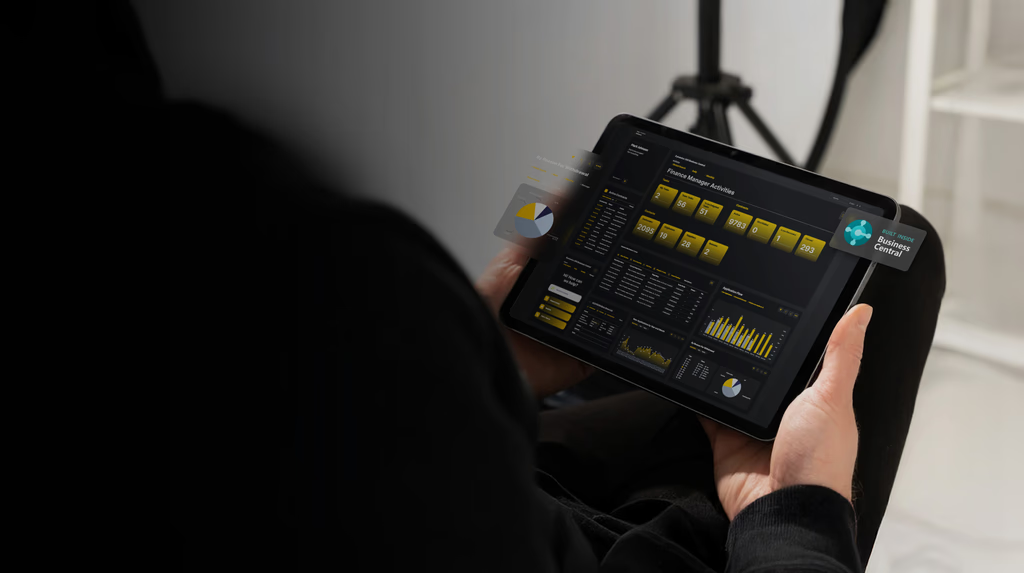
Lease management platforms are built to centralize asset and contract data, automate workflows, and provide real-time visibility across the portfolio. Instead of relying on disconnected tools, everything—from asset records to billing and lifecycle events—lives in one environment.
Solutions like SOFT4Leasing support this approach by combining contract management, asset tracking, billing, and reporting into a single system. This allows leasing companies to maintain a clear, unified view of every asset and its business context, without the need for manual reconciliation across multiple tools.
Conclusion
Tracking leased assets effectively is not about adding more tracking tools—it’s about connecting the right data. When customer, contract, location, and status are managed together in one system, visibility improves, errors decrease, and operations become more efficient.
For leasing companies looking to scale without losing control, the goal is simple: create a single source of truth where every asset can be tracked in real time, with full business context. That’s what turns asset tracking from a daily struggle into a strategic advantage.