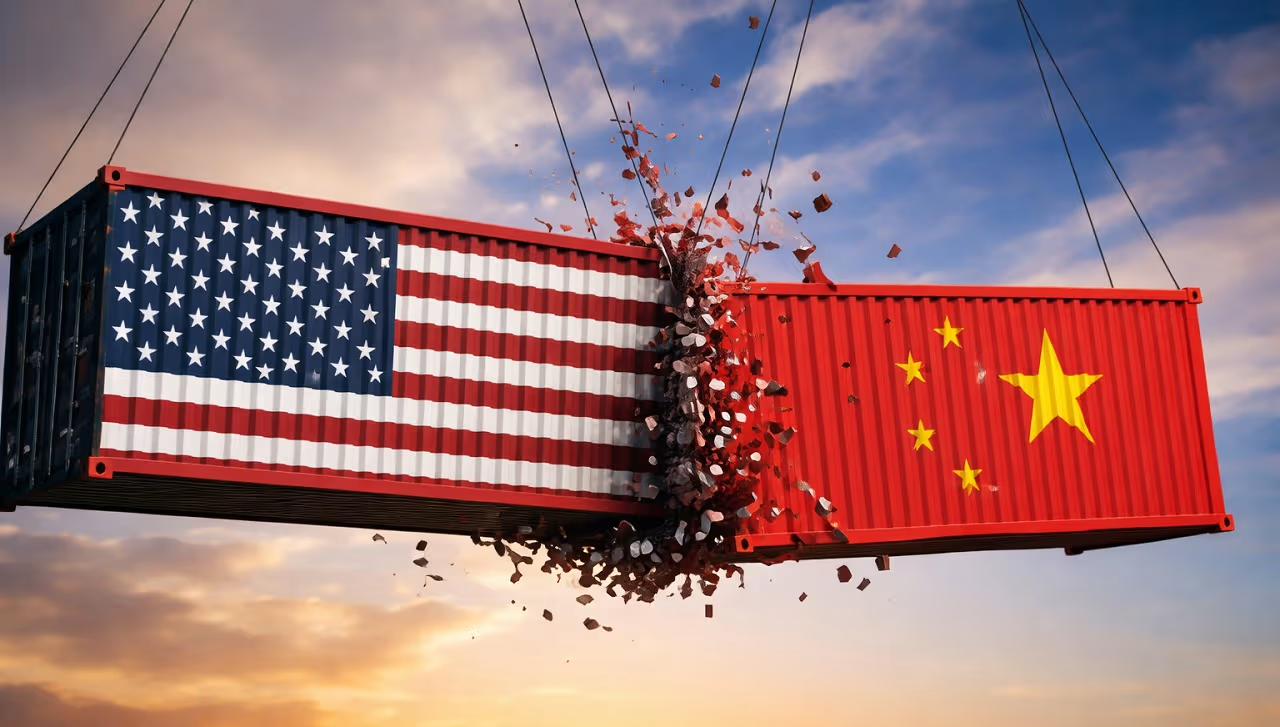
From rising manufacturing costs to disrupted supply chains, trade wars have reshaped how American businesses operate in the global economy. As the world’s two largest economies, the United States and China, continue to navigate escalating tariffs, retaliatory measures, and supply chain shifts, the consequences ripple through every sector of the U.S. economy.
A trade war occurs when countries impose tariffs, quotas, or other barriers on each other’s goods and services, typically in response to perceived unfair trade practices, national security concerns, or efforts to protect domestic industries. The ongoing U.S.-China tensions, which intensified in the late 2010s and escalated further in 2025 with higher tariffs and restrictions on critical materials like rare earths, exemplify this dynamic.
Businesses in the USA are directly affected because they operate in highly integrated global supply chains. Many rely on Chinese components for manufacturing, import finished goods for retail, or export to Chinese markets. Higher costs, uncertainty, and retaliatory actions erode profit margins, delay investments, and force strategic pivots.
This article examines the mechanics of trade wars, their immediate and long-term impacts on businesses of all sizes, effects on employment and consumers, potential winners, adaptation strategies, and the future outlook for U.S. trade relations. You can visit torichain.com to get more up-to-date financial news, cryptocurrency updates, investment options, and news related to the solar market.
Understanding Trade Wars
Trade wars are economic conflicts where nations use trade policy as leverage. At their core are tariffs—taxes imposed on imported goods, which raise the price of foreign products to make domestic alternatives more competitive or to punish trading partners.
Governments impose tariffs for several reasons: to protect strategic industries (e.g., steel or semiconductors), address trade imbalances, counter subsidies or intellectual property theft, or advance national security goals. In retaliation, the targeted country often imposes its own tariffs on U.S. exports, creating a cycle of escalation.
How Trade Wars Begin
Trade disputes often start with investigations under laws like Section 301 of the U.S. Trade Act, which addresses unfair foreign practices. The U.S.-China conflict escalated from concerns over forced technology transfers, state subsidies, and massive trade deficits. By 2025, U.S. tariffs on Chinese goods averaged high levels, prompting Chinese restrictions on exports like rare earth magnets critical for automotive and electronics industries.
Historical examples include the Smoot-Hawley Tariff Act of 1930, which worsened the Great Depression by triggering global retaliation, and more recent disputes like U.S. steel tariffs in the early 2000s. The current U.S.-China tensions stand out due to the scale of economic interdependence and the involvement of high-tech sectors.
Bilateral trade volumes dropped significantly in 2025, with U.S. imports from China falling sharply as companies rerouted through third countries.
While intended to rebalance trade and boost domestic production, these measures often lead to higher costs passed on to businesses and consumers, with mixed results on job creation.
The Immediate Impact on American Businesses
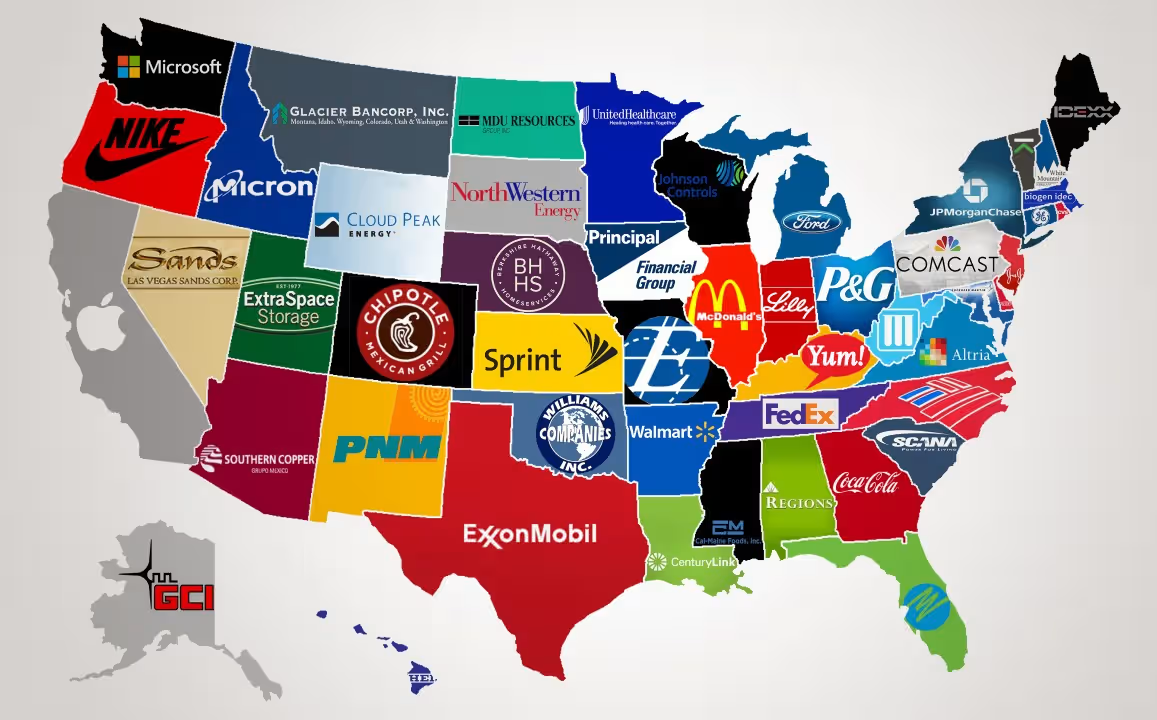
The short-term effects of trade wars hit quickly through increased costs and uncertainty.
Higher Costs for Imported Goods
Tariffs directly raise the price of imported inputs and finished products. U.S. companies importing components from China face immediate cost increases, often absorbing them to maintain competitiveness or passing them to customers. Studies from previous rounds showed U.S. firms bearing most of the tariff burden, with costs in the tens of billions.
Supply Chain Disruptions Across Industries
Manufacturing, technology, and retail sectors are particularly vulnerable. In 2025, Chinese restrictions on rare earth exports briefly halted U.S. auto production lines, affecting hundreds of thousands of workers in just-in-time supply chains. Electronics firms faced delays in components for smartphones and servers, while retailers saw higher prices on consumer goods.
Profit margins shrink as businesses grapple with volatility. Financial planning becomes difficult amid shifting tariff policies, leading to deferred investments and hiring slowdowns. Small manufacturers and importers reported operating at losses or reducing staff due to unpredictable costs.
Impact on Small Businesses vs. Large Corporations
Trade wars disproportionately affect businesses based on size and resources.
Why Small Businesses Suffer the Most
Small businesses often lack negotiating power with suppliers and have limited ability to absorb cost increases. Many operate with thin cash reserves and cannot easily diversify sourcing. In 2025, the smallest firms saw significant job losses—far exceeding pandemic-era declines in some reports—due to higher input costs in manufacturing, construction, and related sectors. A food truck manufacturer in Colorado, for example, struggled with imported equipment costs.
Large corporations fare better. Firms like Apple shifted some iPhone production to India, while Nike expanded in Vietnam. They leverage financial flexibility to relocate manufacturing, invest in automation, or negotiate exemptions. However, even giants face challenges from indirect supply chain dependencies.
Effects on Employment and Wages
Trade conflicts create uneven labor market pressures. Job losses occur in export-oriented sectors hit by retaliation, such as agriculture (soybeans) and manufacturing reliant on imports. The steel industry saw some protection but downstream users (auto, construction) faced higher material costs, leading to layoffs.
Manufacturing employment trends showed contraction in 2025 despite policy goals, with tens of thousands of jobs lost amid uncertainty. Hiring slowed across exposed industries, and wage pressures mounted as firms cut costs. Automotive and related supply chains were especially disrupted.
Workers feel the impact through reduced hours, stalled wage growth, and sectoral shifts. While some domestic producers may gain, overall blue-collar job creation lagged in many states.
Consumer Impact and Inflation
Consumers ultimately bear much of the burden. Rising product prices for electronics, vehicles, apparel, and household goods stem from higher import costs. Inflationary pressure reduces purchasing power, with estimates suggesting added annual costs per household in prior rounds.
Why Consumers End Up Paying More
Tariffs act like a tax on imports. When supply chains cannot shift quickly, prices rise. Reduced competition can also allow domestic producers to charge more. In 2025–2026, families faced higher costs for everyday items, contributing to broader economic strain.
Are There Any Winners in a Trade War?
Benefits are often short-term and uneven. Domestic manufacturers in protected sectors, like certain steel producers, may see temporary gains from reduced competition and policy support.
Alternative supplier countries—Vietnam, India, Mexico—gained from trade diversion, attracting new investment. Some U.S. firms benefited from reshoring incentives or nearshoring.
However, gains are frequently offset by broader costs. Retaliation hurts exporters, and long-term inefficiencies from fragmented supply chains reduce overall competitiveness. Many “winners” still face higher global prices and uncertainty.
Long-Term Economic Consequences
The Risk to America’s Global Position
Prolonged trade wars can erode U.S. competitiveness. Higher costs hinder innovation and investment, while fragmented trade relationships complicate alliances. Global trade diversion benefits third countries, potentially diminishing U.S. influence.
How Investors React to Trade Tensions
Markets dislike uncertainty. Stock volatility increases, particularly for multinational firms. Investor confidence wanes, leading to deferred capital expenditures. While some sectors see short-term boosts, overall economic growth slows due to reduced trade efficiency and productivity losses.
Broader risks include slower GDP growth, strained international relations, and challenges in addressing global issues like technology standards.
Business Survival Strategies in a Trade War Era
Adaptive companies are thriving by rethinking operations.
Diversifying supply chains (“China +1”) reduces risk. Nearshoring to Mexico or reshoring to the U.S., supported by incentives like the CHIPS Act, gains traction. Automation and AI help offset labor and cost pressures. New trade partnerships with allies strengthen resilience.
Success depends on agility, technology investment, and strategic foresight. Firms that treat trade wars as a catalyst for modernization position themselves better for the future.
What Comes Next for American Businesses?
U.S.-China relations in 2026 remain tense but show signs of managed engagement, with potential summits and narrow deals on issues like agriculture and critical minerals. Emerging trends include greater regionalization of supply chains, technology decoupling in sensitive areas, and multipolar trade dynamics.
Geopolitical factors, including Taiwan and tech competition, will influence policy. Businesses should prepare for persistent volatility while capitalizing on opportunities in diversified markets and domestic innovation.
Conclusion
Trade wars create both risks and opportunities. While they impose real costs on American businesses, workers, and consumers through higher prices, disruptions, and uncertainty, they also accelerate necessary adaptations in supply chains and technology. Long-term success depends on flexibility, strategic global positioning, and sound policy that balances protection with openness.
In an increasingly interconnected world, the economic impact of trade wars extends far beyond politics—shaping the future of American businesses, workers, and consumers alike.