Kyiv, Ukraine — May 6, 2026 — Russian forces have launched fresh waves of drone and missile strikes across Ukrainian territory, killing dozens of civilians in one of the deadliest series of attacks in recent weeks, even as competing unilateral ceasefire proposals circulate ahead of Russia’s Victory Day commemorations.
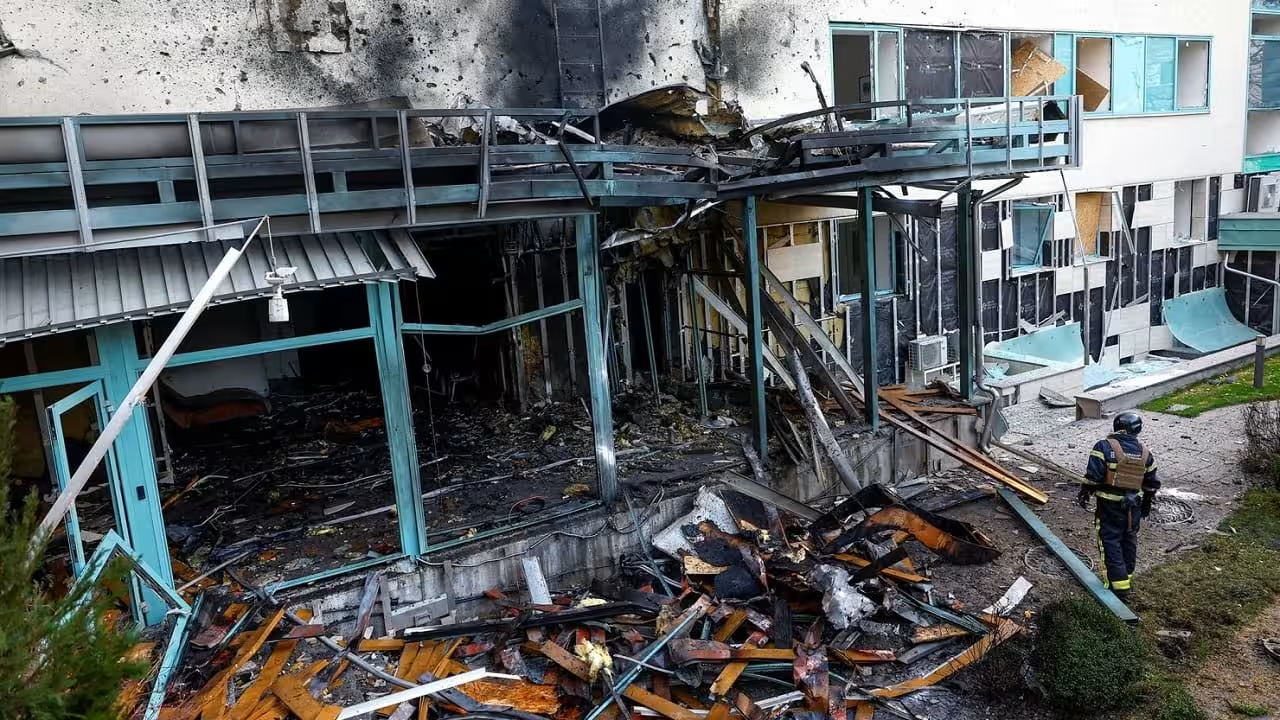
Ukrainian officials reported that overnight and daytime attacks on May 5 and into May 6 involved dozens of drones and multiple ballistic missiles, striking residential areas, infrastructure, and cities including Zaporizhzhia, Dnipro, Kramatorsk, and Chernihiv.
At least 22 to 27 people were killed and more than 80–120 others wounded, according to various reports from Ukrainian authorities and emergency services.
In Zaporizhzhia alone, a single strike killed at least 12 civilians. Additional fatalities were reported in Dnipro and other regions. These assaults came on the eve of Ukraine’s proposed open-ended unilateral ceasefire, which began at midnight on May 5–6, and just days before Russia’s announced two-day pause for Victory Day on May 8–9.
Russia Rejects Ukraine’s Ceasefire Offer
Ukraine’s President Volodymyr Zelenskyy proposed the ceasefire in an effort to de-escalate hostilities and urged Russia to reciprocate. However, Russian forces continued operations unabated, firing dozens of drones and missiles after the Ukrainian ceasefire deadline. Ukrainian officials described the actions as a clear rejection of peace overtures, with one senior diplomat noting that Russia’s behavior exposed the insincerity of its own ceasefire calls.
Zelenskyy condemned the strikes as “utter cynicism,” highlighting the timing just before Russia’s planned pause tied to its Victory Day celebrations.
Large-Scale Assaults and Cross-Border Strikes
The recent Russian barrage is described as one of the largest in weeks, involving significant numbers of Shahed-type drones and Iskander ballistic missiles. Ukrainian air defenses intercepted many, but impacts on civilian areas were severe.
In a notable escalation on the Ukrainian side, long-range strikes hit deep inside Russian territory. Attacks targeted military-industrial facilities in Russia’s Chuvashia region (over 1,000 km from the border), killing at least two people. Ukrainian President Zelenskyy confirmed the use of domestically produced Flamingo cruise missiles in these operations.
Such deep strikes illustrate how the conflict is expanding geographically, with both sides conducting retaliatory and offensive operations far from the front lines.
Victory Day Preparations Amid Security Fears
Russia is preparing for its annual Victory Day parade on May 9, marking the 81st anniversary of the Soviet victory over Nazi Germany in World War II. This year’s event is significantly scaled down: no heavy military equipment or tanks will be displayed on Red Square, due to security concerns over potential Ukrainian drone attacks.
Russia announced its own unilateral ceasefire for May 8–9 to facilitate the commemorations and threatened a “massive missile strike” on central Kyiv if Ukraine attempts to disrupt the events. Ukrainian officials have largely dismissed Russia’s proposal as insincere or tactical.
Broader Context of the Ongoing War
The Russia-Ukraine conflict, now in its fifth year, continues to feature frequent aerial assaults, infrastructure targeting, and cross-border operations. Despite periodic diplomatic signals and ceasefire announcements, active military operations persist on both sides with no immediate signs of de-escalation.
Analysts note that the dueling ceasefire proposals highlight deep mistrust: Ukraine seeks a broader, open-ended halt to fighting, while Russia’s pause appears narrowly tied to protecting its symbolic national holiday.
The situation remains fluid and highly volatile. Ceasefire efforts have so far failed to take hold, and the coming days around Victory Day may see further intensification or a brief tactical lull. Civilian casualties continue to mount as the geographically expanding conflict shows little sign of abating.

This is Kyle Thomas, a professional writer, and a news editor. I started my career as a blogger who writes on various topics and then I decided that I should join a NEWS agency where I can work as a NEWS reporter. So, I joined a renowned agency in the town as an internet and after getting 2 years of experience, now I am working as a senior NEWS reporter for The Daily NEWS Times.