Washington, D.C. — May 6, 2026 — In a significant de-escalation move, President Donald Trump has ordered a temporary pause to the U.S. military’s “Project Freedom” naval escort operation in the Strait of Hormuz, citing progress in ongoing peace negotiations with Iran.
The decision, announced late on May 5 via Truth Social, comes just one day after the operation began and marks the first major U.S. step back from direct military involvement in the critical waterway amid heightened tensions that had pushed the region to the brink of wider conflict.
Background: From Escalation to Pause
The Strait of Hormuz, through which roughly 20% of global oil passes, became a flashpoint in early April 2026 following a series of attacks on commercial shipping vessels. Iran’s closure or restriction of the strait led to hundreds of ships becoming stranded, spiking global oil supply fears and driving up energy prices.
In response, the U.S. launched “Project Freedom,” a naval escort mission aimed at guiding commercial vessels safely through the waterway. The operation was framed as a humanitarian effort to free trapped shipping and counter Iranian actions, with the U.S. Navy beginning active guidance on May 4-5.
However, backchannel diplomatic efforts had been intensifying since late April. Mediators, including Pakistan and others, played a key role in keeping negotiations alive. Early framework discussions reportedly touched on sanctions relief, limits on Iran’s nuclear program, and maritime security guarantees.
Talks had previously stalled over sequencing: Iran insisted on ending hostilities and addressing broader issues first, while the U.S. prioritized nuclear restrictions. Despite these differences, momentum reportedly built in recent days.
The Pause and Its Rationale
In his announcement, President Trump stated: “Based on the request of Pakistan and other Countries, the tremendous Military Success that we have had during the Campaign against the Country of Iran and, additionally, the fact that Great Progress has been made toward a Complete and Final Agreement with Representatives of Iran, we have mutually agreed that, while the Blockade will remain in full force and effect, Project Freedom (The Movement of Ships through the Strait of Hormuz) will be paused for a short period of time to see whether or not the Agreement can be finalized and signed.”
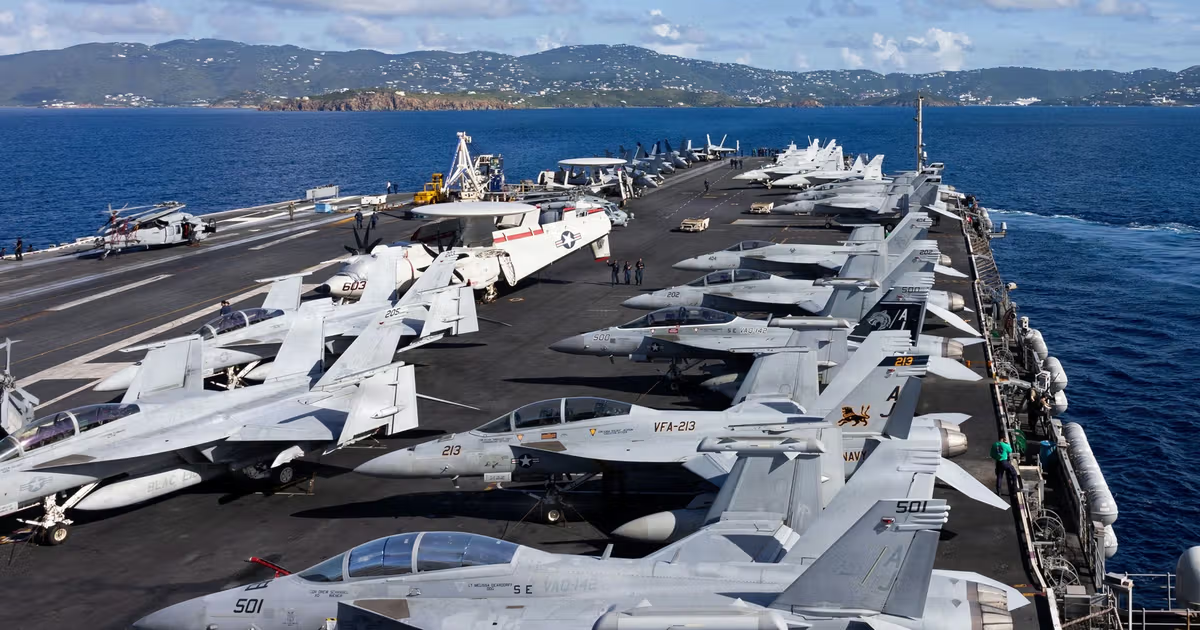
The pause is explicitly temporary and does not constitute a full ceasefire or withdrawal. The U.S. maintains its naval blockade of Iranian ports, and military presence in the region remains robust. Officials emphasize it is a calculated move to build trust and create diplomatic space.
Negotiations Gain Momentum
As of May 6, reports indicate the U.S. and Iran are nearing a preliminary one-page, 14-point Memorandum of Understanding (MOU). This framework would temporarily halt hostilities and launch a roughly 30-day period of formal negotiations on core issues, including the nuclear program, sanctions, and security in the Strait of Hormuz.
No final agreement has been signed, and sources stress that responses on key points are expected in the coming 48 hours. The MOU is being negotiated through envoys, including Steve Witkoff and Jared Kushner on the U.S. side, with Iranian officials and mediators.
Global Market Reaction
Financial markets reacted swiftly to the reduced risk of escalation. Oil prices dropped sharply by approximately 10-11%, with Brent crude falling below $100 per barrel. Broader global stock markets rallied on hopes of reopened shipping lanes and stabilized energy supplies.
Risks and Outlook
While the pause has opened a diplomatic window, the situation remains highly fragile. Analysts warn that talks could collapse, potentially leading to resumption of military operations. Core disputes—particularly around Iran’s nuclear ambitions, sanctions relief, and long-term security arrangements—have yet to be resolved.
Iran has not yet issued an official comment on the latest developments, though state media has previously outlined demands including guarantees against future aggression, asset releases, reparations, and a new Hormuz mechanism.
This moment represents a pivotal shift from military pressure to diplomatic engagement in the U.S.-Iran crisis. The coming days will determine whether Trump’s strategic pause yields a lasting breakthrough or proves to be only a brief interlude in a volatile conflict.

This is Kyle Thomas, a professional writer, and a news editor. I started my career as a blogger who writes on various topics and then I decided that I should join a NEWS agency where I can work as a NEWS reporter. So, I joined a renowned agency in the town as an internet and after getting 2 years of experience, now I am working as a senior NEWS reporter for The Daily NEWS Times.