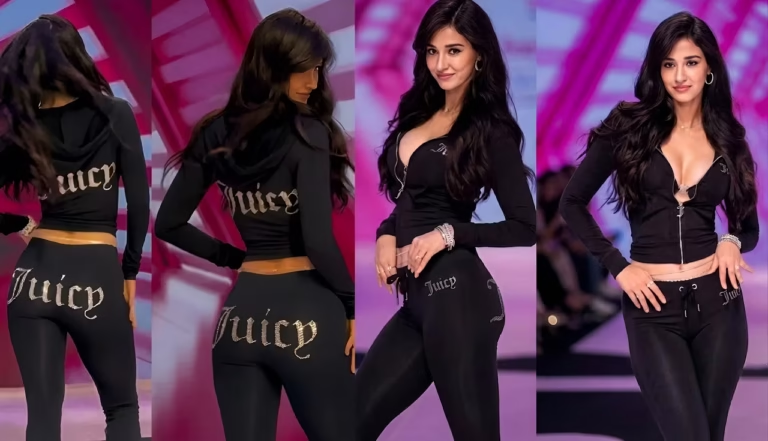
In early 2026, the fashion world buzzed with talk of a “lingerie war.” Headlines pitted rising star Sydney Sweeney against the iconic Victoria’s Secret, framing it as a clash between fresh celebrity entrepreneurship and a legacy giant struggling to reinvent itself. The spark? Sweeney’s bold launch of SYRN (pronounced “sye-rin”), a direct-to-consumer lingerie brand emphasizing inclusivity, comfort, and personal empowerment.
Sydney Sweeney, the Emmy-nominated actress known for roles in Euphoria and The Housemaid, has built a reputation for blending girl-next-door charm with unapologetic sensuality.
Her personal brand thrives on social media virality and high-profile campaigns. Victoria’s Secret, once the undisputed queen of lingerie with its glamorous Angels and annual fashion shows, has faced years of declining relevance amid shifting consumer tastes toward body positivity and everyday comfort.

This narrative positions Sweeney as the “new school” disruptor targeting younger shoppers, while Victoria’s Secret represents the “old guard” adapting (or resisting) change. But is it a genuine business battle, or savvy media hype designed to drive attention in a crowded market? The story reveals deeper truths about fame, branding, and how Gen Z is reshaping the $20+ billion U.S. lingerie industry.
What Sparked the “Lingerie War”?
The rivalry narrative ignited in January 2026 when Sweeney launched SYRN following a controversial publicity stunt. She and a crew scaled the Hollywood sign at night, draping it with bras—a guerrilla marketing move captured on video and shared widely, drawing both praise for boldness and backlash for potential trespassing or vandalism.
SYRN debuted with the “Seductress” collection on January 28, featuring lace-trimmed underwear, comfortable bras, and pieces in four “personas”: Seductress, Romantic, Playful, and Comfy.
The brand offered 44 sizes (ranging from 30B to 42DDD or similar extended ranges) and priced most items under $100, positioning it as accessible yet aspirational. Subsequent drops included “Comfy” basics and festival-inspired Western looks for events like Stagecoach, where SYRN became the official lingerie partner.
Viral campaigns amplified the buzz. Sweeney starred in her own ads, posing in barely-there sets and “Do What Makes You Naked” collections. Celebrity collaborations followed, notably with influencer and gymnast Livvy Dunne, whose photoshoot for SYRN fueled “war” headlines and even correlated with dips in Victoria’s Secret stock.
Media outlets ran with the rivalry angle, especially outlets like OutKick dubbing it the “Great Lingerie War of 2026.” Yet many analysts view the “war” as more branding than conflict. Sweeney’s stunt and drops generated massive free publicity, much like her polarizing American Eagle campaigns that boosted retailer sales.
Victoria’s Secret, meanwhile, was already in turnaround mode with its 2025 fashion show revival. The framing served both: SYRN gained instant visibility as a challenger, while Victoria’s Secret stayed culturally relevant through contrast.
Sydney Sweeney’s Brand Strategy
SYRN’s strategy centers on authenticity rooted in Sweeney’s own experiences. She has spoken about frustration with ill-fitting bras since sixth grade, driving the brand’s focus on better straps, bands, and real-world wearability. “I wanted to build a lingerie brand that feels like it understands women instead of talking at them,” she told Elle.

Positioning targets Gen Z and younger millennials with inclusive sizing, trend-driven drops, and four mood-based “worlds” that allow women to feel seductive, romantic, playful, or comfy—reflecting multifaceted identities rather than one fantasy ideal. Marketing is celebrity-led and heavily social-first: Sweeney models most campaigns herself, photographed by female artists, emphasizing empowerment on personal terms.
Social media virality serves as the primary growth engine. From Hollywood sign antics to bold pose videos and Instagram dumps styling SYRN pieces with streetwear, the brand leverages Sweeney’s massive following for organic reach.
Backed by venture capital from Coatue Management (with ties to tech and celebrity networks), SYRN operates as a direct-to-consumer (DTC) label, enabling fast drops and data-driven iterations without traditional retail overhead.
Personal branding powers it all. Unlike passive celebrity endorsements, Sweeney positions herself as founder-CEO, blending her on-screen persona with entrepreneurial ambition. Early sell-outs of the Seductress collection demonstrated demand, though some critics noted quality concerns or questioned depth beyond hype.
Victoria’s Secret: The Legacy Giant Responds
Victoria’s Secret dominated for decades with its supermodel “Angels,” fantasy marketing, and annual televised shows. By the late 2010s and early 2020s, however, sales stagnated amid criticism of narrow beauty standards, lack of diversity, and leadership scandals (including ties to Jeffrey Epstein). Competitors like Savage X Fenty captured share with radical inclusivity.
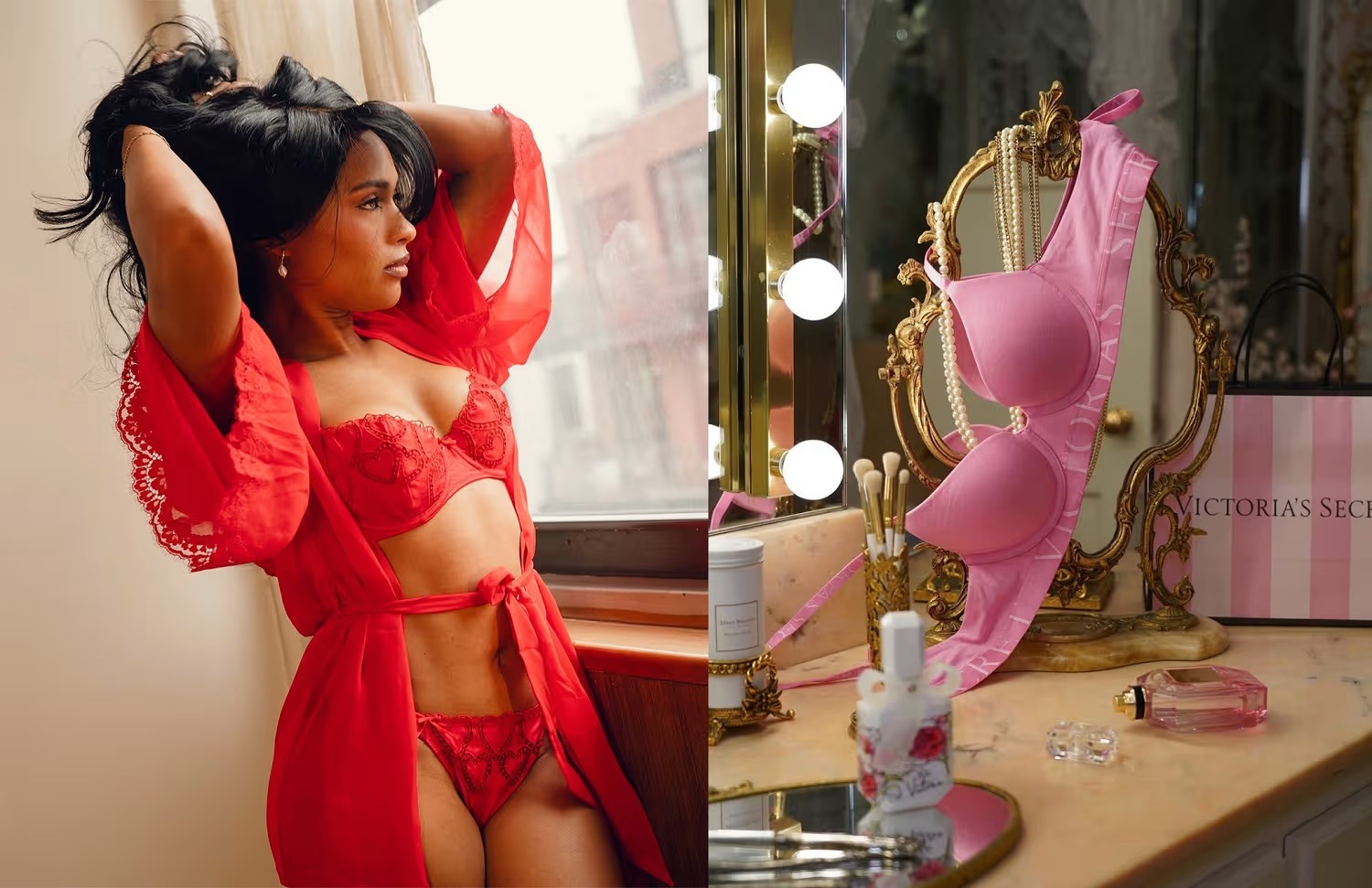
Recent evolution shows adaptation. Under CEO Hillary Super (who joined in 2024), the brand introduced the “Path to Potential” plan in 2025, focusing on bras, Pink sub-brand revival, beauty/sport/swim expansion, and faster go-to-market strategies.
The 2025 fashion show returned with a modern twist: diverse models (including pregnant athletes), influencers as new “Angels,” and a blend of fantasy with relatability. By 2026, reports indicated stabilizing sales, with comparable growth and international gains.
Rebranding efforts emphasize “inclusion and belonging” over earlier DEI language, while recommitting to core sexy DNA rather than fully chasing trends. The brand has leaned into athletes, body diversity in campaigns, and omnichannel retail. Yet challenges persist: legacy perceptions of objectification, competition from comfort-focused DTC brands, and pressure to balance heritage with relevance.
In response to new entrants like SYRN, Victoria’s Secret has refreshed campaigns and maintained high-visibility events, but it must navigate slower innovation cycles compared to agile startups.
New School vs Old School Marketing
The contrast highlights broader industry shifts. Sydney Sweeney embodies the celebrity-founder model: personal authenticity, rapid social drops, and influence marketing drive growth. SYRN relies on Instagram virality, user-generated buzz, and founder-as-muse imagery—fast, low-cost, and highly engaging for digital natives.
Victoria’s Secret represents traditional fashion giant tactics: heritage branding through iconic shows, supermodels, and in-store experiences. Its marketing has evolved toward influencers and multiplatform storytelling, but it retains elements of polished, aspirational campaigns with higher production values.
Direct-to-consumer disruption gives SYRN advantages in personalization and speed, bypassing wholesale markups. Influence marketing trumps pure heritage for younger audiences who value relatability over unattainable fantasy. Yet Victoria’s Secret’s scale enables broader reach, loyalty programs, and category dominance in bras and beauty.
Is This Really a Business Threat to Victoria’s Secret?
Early reactions mixed hype with skepticism. SYRN’s launch and Dunne collaboration reportedly pressured Victoria’s Secret stock (one report noted a 4% dip), echoing how Sweeney’s American Eagle ads spiked that retailer’s performance. However, scale tells a different story.
Victoria’s Secret & Co. generates billions in annual revenue with vast retail footprint and global presence. SYRN, as a new DTC startup, operates at a fraction of that—early sell-outs signal promise, but sustained threat requires proving repeat purchase, quality, and expansion beyond hype.
Analyst opinions vary. Some see celebrity startups (à la Skims or Rhode) as capable of carving niches, especially in comfort and inclusivity. Others view it as hype: most celebrity lines fade without strong operations. Business models differ—SYRN bets on virality and founder equity; Victoria’s Secret leverages ecosystem strength.
Can a startup disrupt an empire? Possible in segments, but unlikely to topple it outright without massive scaling. Media reaction amplified drama, but fundamentals favor the incumbent for now.
Why Gen Z Is Changing the Lingerie Industry
Gen Z prioritizes comfort, identity, and self-expression over traditional fantasy. Surveys and trends show demand for body positivity, extended sizing, seamless designs, and pieces that feel empowering rather than performative. Younger buyers favor brands reflecting real bodies and daily life—soft sensuality, adaptive options, and authenticity trump airbrushed perfection.
This shift favors newer entrants. Preferences for novelty via social media, sustainability signals, and value-driven purchasing erode loyalty to legacy names. SYRN taps this with mood-based personas and inclusive ranges; Victoria’s Secret has adjusted but carries baggage from past exclusivity. Broader market growth (U.S. lingerie projected to rise significantly through 2033) rewards those adapting to these values.
Media Hype or Genuine Industry Shake-Up?
Headlines manufactured drama by contrasting Sweeney’s stunt-driven launch with Victoria’s Secret’s comeback efforts. Pop culture’s celebrity news cycle thrives on rivalries, turning business moves into entertainment. The “war” narrative boosted engagement for both but risks oversimplifying: SYRN gains visibility as underdog innovator; Victoria’s Secret appears responsive rather than stagnant.
Is the rivalry real? Partially—competition for Gen Z dollars exists—but manufactured elements dominate. No evidence of direct retaliation; instead, parallel strategies in a fragmenting market. Genuine shake-up comes from broader forces: DTC rise, influencer power, and consumer evolution, not one actress vs. one brand.
Other Brands Feeling the Pressure
SYRN joins a wave of disruptors. Skims (Kim Kardashian) dominates comfort shapewear with massive valuation. Savage X Fenty pioneered inclusive, bold marketing. Emerging players emphasize sustainability, adaptive lingerie, tech integration, or niche aesthetics. Traditional names like Aerie (American Eagle’s sub-brand) succeed with body positivity, while others struggle.
This signals industry evolution: comfort meets fashion, inclusivity as baseline, and hybrid marketing. Legacy giants face pressure to innovate or lose share; startups must convert buzz into loyalty. The future favors agile, values-aligned brands in a market growing toward $30+ billion in the U.S. alone.
Conclusion
Sydney Sweeney is not single-handedly toppling Victoria’s Secret—she is riding (and fueling) a media wave while building a legitimate DTC brand grounded in personal insight and Gen Z preferences. The “lingerie war” reveals much about modern fashion: fame accelerates launches, social virality replaces traditional advertising, and consumer power—especially younger generations demanding comfort and authenticity—drives change.
Ultimately, it is disruption and publicity. SYRN highlights opportunities for celebrity-led innovation in niches, while Victoria’s Secret demonstrates a giant’s capacity for reinvention. The real winners will be brands that deliver consistent quality, inclusivity, and resonance beyond headlines.
In an industry blending fantasy with everyday reality, both approaches offer lessons: bold risks capture attention, but sustained adaptation secures longevity. The lingerie market’s future looks more diverse, comfortable, and consumer-centric than ever.

Myself Aditya and I am from Mumbai, India. As an intern, I joined the local news agency in Mumbai named “The Mumbai News”. Now I am working with various News Agencies and I provide them reports from Mumbai and other parts of India.