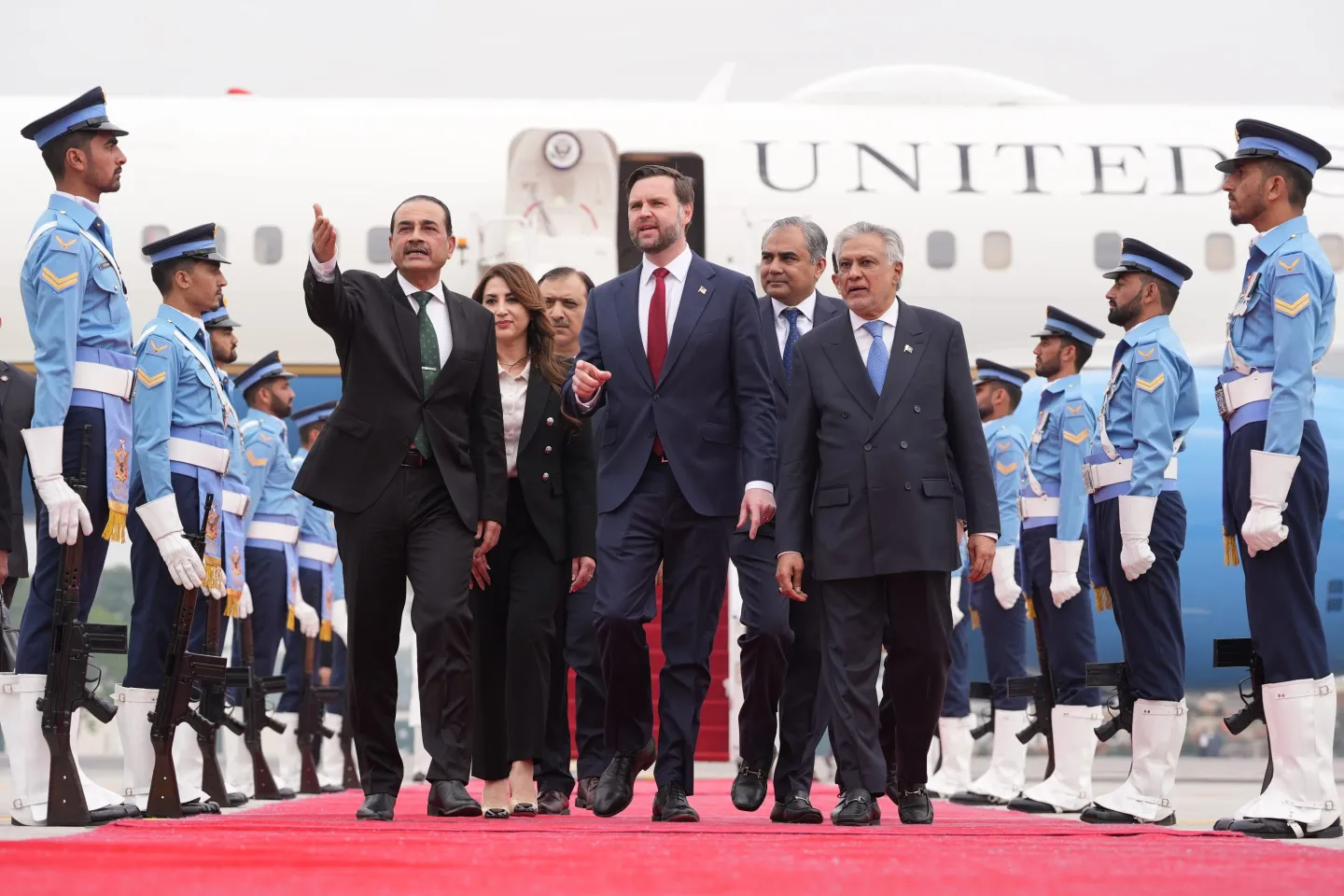
The world is holding its breath. With the fragile ceasefire in the US-Iran war on the verge of total collapse, President Donald Trump has just announced that a high-powered American delegation — led by Vice President JD Vance — will touch down in Pakistan on Monday for what could be the last chance at a diplomatic breakthrough before the region explodes once again.
This isn’t just another round of talks. This is high-stakes brinkmanship on a global scale. The temporary truce, already hanging by a thread, faces imminent danger as both sides hurl accusations of betrayal — and the vital Strait of Hormuz has slammed shut again, bringing global oil flows to a grinding halt.
Vance Leads the Charge — With Massive Leverage
Vice President JD Vance will head the US team, accompanied by seasoned envoys including Jared Kushner and Steve Witkoff. After the grueling first round of negotiations in Islamabad earlier this month produced only a shaky two-week pause in fighting, the pressure is now sky-high. The ceasefire is due to expire in days, and failure in Pakistan could trigger immediate, devastating consequences.
Trump has made his position crystal clear and uncompromising: reach a deal, or face overwhelming American firepower. He has repeatedly warned that if no agreement is secured, US forces stand ready to hammer Iran’s power plants, bridges, and critical infrastructure in a lightning campaign of “complete demolition.”
The president’s latest threats carry extra weight now — with the clock ticking loudly toward potential strikes that could plunge Iran into darkness and chaos within hours.
Hormuz on Fire: Ceasefire in Tatters
The immediate spark? Pure maritime mayhem in the Strait of Hormuz.
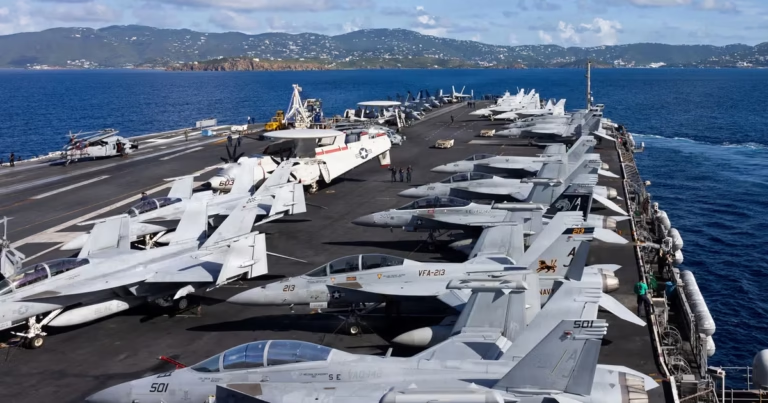
On Saturday, shots rang out as Iranian forces fired on vessels attempting to navigate the narrow chokepoint. Trump wasted no time labeling it a “total violation” of the ceasefire. Iran fired back, accusing the US of breaking the truce first through its aggressive naval blockade of Iranian ports.
In response, Tehran has once again fully closed the Strait of Hormuz — the artery carrying roughly one-fifth of the world’s oil supply. Shipping has ground to a near standstill, tankers are turning away or hunkering down, and global energy markets are already feeling the shockwaves. Gunboats from Iran’s Revolutionary Guard have been spotted aggressively patrolling, turning this strategic waterway into a floating powder keg.
The world economy is watching nervously. Any prolonged closure could send oil prices soaring, disrupt supply chains worldwide, and risk drawing in other powers into the fray.
Conflicting Signals from Tehran
Iran’s state media has flatly denied reports of fresh talks in Pakistan, calling them “not true.” Yet no top Iranian official has delivered a final word, leaving the door slightly — and tantalizingly — ajar. Will Tehran send a delegation with real authority, or will this become another missed opportunity that pushes the conflict back into open warfare?
Pakistan, playing the delicate role of mediator once more, is pushing hard to keep both sides at the table and extend the ceasefire. But with mutual distrust at boiling point, the margin for error is razor-thin.
What Happens Next Could Change Everything
This upcoming round in Pakistan carries enormous weight. Success could mean a longer truce, reopened sea lanes, and a path — however narrow — toward de-escalation. Failure, however, risks unleashing the full fury of renewed strikes: American precision targeting of Iranian infrastructure, possible Iranian retaliation across the region, and an even tighter stranglehold on global energy.
Trump has framed it as Iran’s “last chance.” The rhetoric is fiery, the military options are on the table, and the stakes — regional stability, global oil prices, and the risk of wider war — have rarely been higher.
As the US delegation prepares to board planes for Islamabad, the coming 48-72 hours may prove decisive. The world is on edge, watching closely. Will diplomacy pull the region back from the abyss… or will the guns of war roar again?

Myself Aditya and I am from Mumbai, India. As an intern, I joined the local news agency in Mumbai named “The Mumbai News”. Now I am working with various News Agencies and I provide them reports from Mumbai and other parts of India.