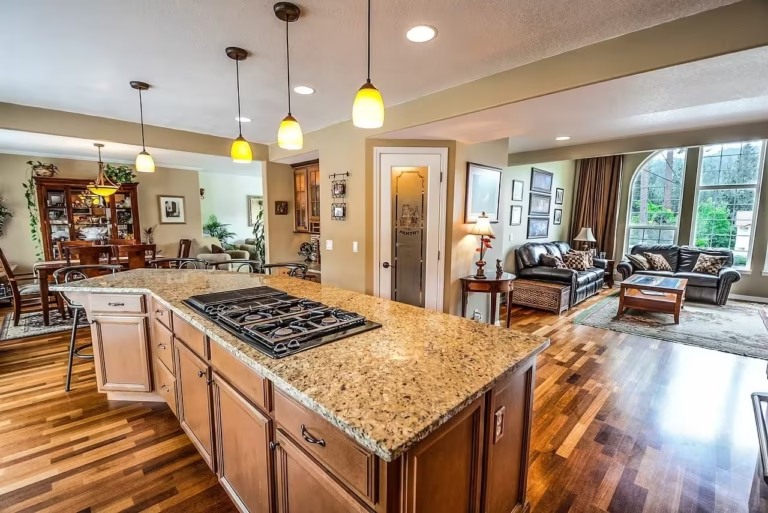
Cosmetic work can change how a home feels without moving walls or rebuilding every system. The best results come from correcting the most visible inconsistencies first and coordinating new surfaces instead of buying isolated “quick fixes.”
For homeowners in Kent, Seattle, and nearby Washington communities, the most reliable approach is to define performance, maintenance, budget, and access requirements before products are ordered or work begins.
Quick Answer
Interior Cosmetic Upgrades should begin with a condition review and a written scope, then move through material selection, sequencing, installation, and final inspection. Homeowners should compare proposals by included work-not by price alone-and ask how preparation, protection, transitions, cleanup, and changes will be handled.
Intra Flooring presents interior cosmetic upgrades as part of a broader home-improvement plan for Kent and Seattle properties, where moisture, seasonal weather, and practical daily use all deserve attention.
What the Service Can Include
The exact scope depends on the property, existing conditions, and the homeowner’s priorities. A useful consultation separates essential condition work from optional appearance improvements and identifies decisions that affect later trades.
- Flooring and transition updates;
- Trim, molding, and wall finishes;
- Cabinet, countertop, and backsplash improvements;
- Storage, stairs, and focused room refreshes;
A clear scope also states what is excluded. That small discipline makes estimates easier to compare and reduces the risk that two parties are pricing different projects under the same service name.
Three Ways to Define the Project Scope
| Approach | Best Use | Key Consideration |
| Surface refresh | Paint, trim, hardware | Good when layout and fixed materials still work |
| Feature upgrade | Counters, backsplash, cabinet fronts | Best for one visually dominant area |
| Coordinated room package | Flooring, walls, trim, storage | Strongest overall transformation without structural work |
How to Plan the Work Step by Step
- Define the outcome: Write down what should be safer, easier, more durable, or more attractive after the interior cosmetic upgrades project. Separate must-haves from preferences.
- Document existing conditions: Photograph problem areas, measurements, access routes, fixed utilities, drainage patterns, and finishes that must remain. Hidden conditions may still require allowances.
- Set a realistic scope and budget: Request an itemized description of preparation, materials, labor, protection, disposal, finish details, and optional upgrades. Keep a contingency appropriate to uncertainty.
- Compare materials by performance: Evaluate exposure, maintenance, expected use, repairability, warranty terms, and compatibility. Samples should be reviewed in the actual setting whenever practical.
- Coordinate sequence and access: Confirm delivery, staging, demolition, weather protection, work hours, pets, vehicles, household access, and which areas must remain usable.
- Inspect details before closeout: Review transitions, edges, fasteners or joints, surface finish, cleanup, operation, and care instructions while the team and project information are still available.
Material and Detail Decisions That Affect Performance
For interior cosmetic upgrades, product names alone do not explain performance. Installation requirements, substrate or support conditions, water management, compatible accessories, and maintenance instructions often matter just as much. Ask for the complete assembly or process to be explained in plain language.
Important decision points include:
- How water, dirt, and seasonal movement will be managed;
- Where new work meets existing walls, floors, roofs, paving, doors, or landscaping;
- Which repairs are included before finish installation;
- What product-specific clearances, fasteners, adhesives, coatings, or curing rules apply;
- How future cleaning, touch-up, replacement, or access will work;
Kent and Seattle Conditions to Discuss
Western Washington projects must be planned for frequent moisture, wet-season logistics, mild but variable temperatures, shaded areas that dry slowly, and properties with slopes or mature landscaping. These conditions do not dictate one product, but they make drainage, drying, ventilation, compatible materials, and realistic scheduling important questions.
Local requirements can vary by jurisdiction, property, and scope. Homeowners should confirm permits, setbacks, structural review, utility locating, association rules, and inspection needs with the appropriate authorities and qualified professionals rather than relying on a generic online checklist.
Common Mistakes to Avoid
- Covering damage before its cause is understood;
- Mixing too many colors and metal finishes;
- Spending heavily on décor while worn fixed surfaces remain;
- Treating preparation as optional;
Another common mistake is accepting vague language such as “standard preparation” or “complete installation” without asking what those phrases mean for this property. Specific written assumptions are more useful than broad assurances.
How Intra Flooring Adds Expert Value
Homeowners researching options can use interior cosmetic upgrade services as a starting point for defining the scope and comparing practical solutions. Intra Flooring serves Kent, Seattle, and other Washington communities, and the company’s broader experience with flooring, materials, coordinated remodeling, and exterior improvements supports decisions at the intersections between surfaces, trim, cabinetry, entries, and adjacent spaces.
The expert value is not simply choosing a finish. It is recognizing dependencies early, explaining tradeoffs, building a scope that can be priced, and coordinating details so one improvement does not create a problem for the next.
Practical Advice Before Signing a Contract
- Confirm the exact areas, quantities, products, profiles, colors, and finish levels.
- Ask who is responsible for permits, protection, moving items, disposal, cleanup, and final touch-ups.
- Request written allowances for conditions that cannot be verified until removal or opening work.
- Compare warranties by coverage, exclusions, maintenance duties, and responsible party.
- Keep approved changes in writing with price and schedule impact before the changed work proceeds.
- Save product records, color information, care instructions, and final photographs for future maintenance.
Frequently Asked Questions
What counts as a cosmetic upgrade?
A cosmetic upgrade improves visible finishes without major structural reconfiguration. Examples include flooring, paint, trim, cabinet finish, hardware, countertops, backsplash, shelving, and stair details.
When is a full remodel unnecessary?
If the layout works, building systems are sound, and the main problem is dated or inconsistent finishes, a focused cosmetic plan may deliver the desired change with less disruption.
Which upgrade has the biggest visual impact?
It depends on the room. Flooring affects the largest continuous surface, while cabinets and countertops dominate kitchens. In a living room, wall color, trim, and lighting coordination may matter more.
Can cosmetic work improve resale appeal?
Clean, coordinated, durable finishes can improve presentation. However, homeowners should prioritize condition, consistency, and broad usability rather than chasing a highly personal trend.
Should all hardware match?
Hardware does not need to be identical, but finishes should relate. Limit the palette and repeat shapes or tones so doors, cabinets, fixtures, and accessories feel intentional.
How can a refresh avoid looking temporary?
Use proper preparation, durable materials, clean transitions, and a written finish plan. A small scope installed well usually looks more permanent than many rushed changes.
Questions to Ask During the Estimate
A useful estimate meeting should convert general goals into measurable scope. Bring photographs and a priority list, then ask the contractor to explain the following points in language that can be reflected in the proposal:
- Which existing conditions are confirmed, and which remain assumptions until removal or opening work?
- Which preparation, protection, transition, disposal, and cleanup tasks are included in the quoted amount?
- What choices must be finalized before scheduling, ordering, or fabrication can begin?
- How will weather, access, delivery, household routines, and adjacent finished surfaces be protected?
- What is the documented process for approving a change in scope, price, product, or completion date?
Conclusion
A strong interior cosmetic upgrades project begins with the problem to be solved, not the product to be purchased. Review existing conditions, define priorities, compare complete scopes, and give preparation and transitions the same attention as visible finishes.
With a clear plan and experienced coordination, homeowners in Kent and the Seattle area can make decisions that improve appearance, daily use, and long-term maintainability without unnecessary complexity or keyword-heavy sales language.