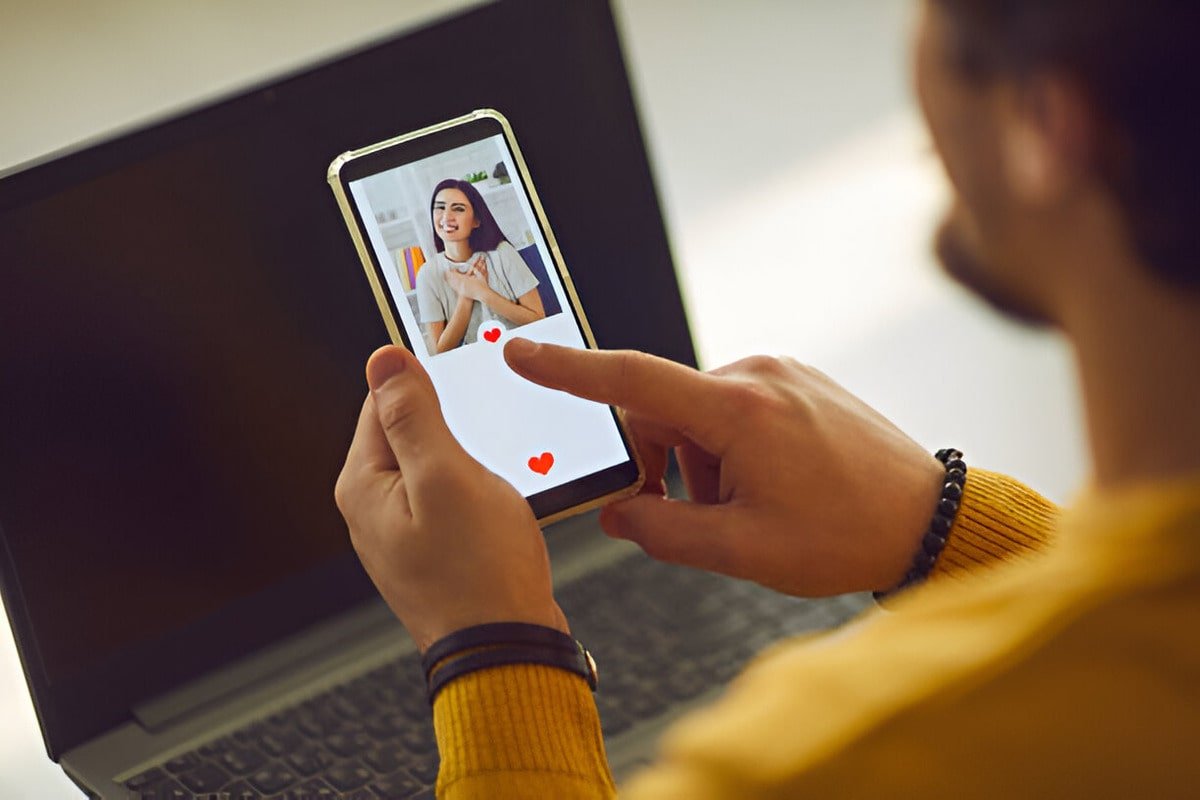
If someone had said twenty years ago that most couples would meet through a smartphone screen, few would have believed it. Romance was associated with chance encounters in bookstores, glances across the room at a party, awkward attempts to strike up a conversation with an attractive stranger in a café.
Today, the phrase “we met on an app” sounds as natural as “we were introduced by friends”. Digitalization has changed everything from how we work to how we fall in love. And this is not a passing fad, but a fundamental transformation of human relationships that deserves careful study.
The New Reality of Romantic Pursuit
The transition of dating to the digital space did not happen in a vacuum. Our entire way of life has changed. Modern people exist in a state of constant time shortage: careers, projects, self-development, hobbies, sports. In this endless race, there is no room for spontaneous encounters with new people. Schedules are planned down to the minute, and social circles are limited to colleagues and old friends.
Megacities create a strange situation: there are millions of people around, but it is becoming increasingly difficult to meet new people. Everyone lives in their own bubble, rushing about their business, closed off by headphones and immersed in the virtual world. Approach a stranger on the street?
Most would consider this an inappropriate invasion of personal space. Social norms have evolved — what was once considered normal flirting may now be perceived as a violation of boundaries.
Online platforms have solved this problem elegantly and effectively. They have created a safe space where everyone is there for the same purpose — to meet someone. Here, the fear of being misunderstood or rejected in front of others disappears. You can calmly study a person’s profile, understand their interests and values, and start a conversation without the pressure of live contact.
The statistics are impressive: according to research, more than 40% of new relationships in developed countries begin online. This is more than through friends, at work, in bars, and other traditional venues combined. The digital revolution in dating is no longer the future, but the present.
Geography is no longer a limitation. You can communicate with someone from another city or country, find like-minded people with rare hobbies, and expand your horizons beyond your usual environment.
For people from small towns, this opens up incredible opportunities — the choice of partners is no longer limited to a few dozen acquaintances.
For shy and introverted people, the digital environment has become a real salvation. The screen provides a sense of security, time to think about answers, and the opportunity to show yourself in the best light without the stress of direct contact. This democratizes the romantic market, giving a chance to those who might otherwise go unnoticed in everyday life due to shyness.
Seeing is Believing: The Revolution of Live Communication
Early dating platforms were quite primitive — static profiles with photos and text correspondence. This format opened up new horizons, but quickly revealed significant shortcomings. Text does not convey intonation, emotional coloring, or a person’s energy. Words can easily create an image that is far from reality. Months of perfect virtual conversation could end in complete disappointment at the first meeting.
Video chats became the next step in the evolution of online dating, combining the convenience of digital communication with the naturalness of live interaction. Services such as Insta Cams or CooMeet.chat offer real-time communication, which fundamentally changes the entire process.
It is no longer abstract correspondence, but a real conversation with a living person whom you can see and hear.
The video format solves several critical problems at once:
- Confirms the person’s authenticity and that they match their profile photos
- Allows you to read non-verbal communication — facial expressions, gestures, intonations
- Gives you the opportunity to assess emotional compatibility and mutual chemistry
- Significantly saves time before deciding to meet in person
Develops spontaneous communication skills without the ability to edit every word. Psychologists note an interesting phenomenon: video communication involves the same cognitive mechanisms as a face-to-face meeting. Our brain instinctively analyzes micro-expressions on the face, picks up on emotional nuances, and reacts to the tone of voice.
We get a multidimensional picture of a person, rather than a flat text image. This makes the acquaintance more comprehensive, reliable, and profound.
Videochats create an intermediate step between the virtual and real worlds. You can communicate with a person while in the comfort of your own home, without the stress of a traditional first date. At the same time, the level of information about the other person is incomparable to correspondence — in a few minutes of video conversation, you can understand more than in weeks of exchanging messages.
The Dark Side of Digital Relationships

It would be unfair to talk only about the advantages, ignoring the problems that the digitalization of dating has created. One of the most insidious is the syndrome of endless choice. When hundreds of attractive profiles float before your eyes every day, consumer thinking kicks in. It constantly seems that the ideal partner is waiting for the next swipe.
This illusion of unlimited possibilities changes the psychology of relationships. People become more picky, less tolerant of flaws, and more easily disappointed. Instead of getting to know a specific person better, it’s easier to go back to the app and continue searching. The paradox is that having too many choices doesn’t make us happier — on the contrary, it breeds chronic dissatisfaction.
The culture of instant evaluation has turned dating into a conveyor belt. People make their verdict in a matter of seconds based on a couple of photos and a short text. This simplifies the process, depriving it of depth. Character, intelligence, sense of humor, life values — all of this remains invisible at the initial selection stage.
A bad selfie can hide an amazing personality, and perfect photos can hide emptiness.The problem of virtual masks is particularly acute. In the digital environment, it is easy to create an embellished version of yourself: edit photos beyond recognition, invent an interesting biography, hide uncomfortable character traits.
Some people become so immersed in creating the perfect image that they lose touch with reality. The first meeting becomes the moment of truth when the masks come off, and this is often painful for both parties. Researchers also note an increase in psychological problems among active users of dating apps.
Dependence on likes and matches, constantly comparing oneself to others, and painful perceptions of rejection all affect self-esteem and emotional well-being. For some, the search for a partner becomes not an exciting adventure, but a source of chronic stress and anxiety.
Wisdom in the Digital Age
The digital transformation of dating is an irreversible process that will only intensify. Artificial intelligence is becoming smarter at matching compatible couples, virtual reality promises to create a sense of complete presence, and technology is developing rapidly. Perhaps in a few years, first dates will take place in fully immersive metaverses.But no matter how advanced technology becomes, it remains only a tool.
True intimacy is born not from compatibility algorithms, but from the human ability to listen, understand, and accept others with all their imperfections. No app can teach you to love, forgive, rejoice in others’ successes, or support them in difficult times.
The key to success is in the conscious use of digital opportunities. It is important not to get lost in endless swiping, to remember that behind every profile there is a real person with feelings and vulnerabilities. Treat dating not as a game or entertainment, but as an opportunity to meet someone important. Be sincere, show your true self, and don’t chase an unattainable ideal.
It’s also important to find a balance between online and offline. Use platforms to expand your circle of acquaintances, but don’t get stuck in the virtual stage for too long. If you feel mutual interest, move on to face-to-face meetings. It is in live communication that the real magic of relationships is born, which cannot be created through a screen.
Online dating has opened up unprecedented opportunities for finding love and friendship. Borders have been erased, barriers have fallen, and horizons have expanded. Now it is up to us how we use this gift — whether we turn it into an endless race for perfection or make it an ally in building happy relationships. Love remains the same ancient mystery, but the paths to it have become more diverse.

Myself Aditya and I am from Mumbai, India. As an intern, I joined the local news agency in Mumbai named “The Mumbai News”. Now I am working with various News Agencies and I provide them reports from Mumbai and other parts of India.